




No Falls Week 2026: Preventing Falls From Height Starts With Safer Decisions
Falls from height remain one of the leading causes of workplace fatalities and serious injuries in the UK. Despite increased awareness, stronger safety procedures, and clearer working at height guidance, unsafe shortcuts still happen every day.
This No Falls Week, the conversation is not only about recognising the risk. It is about understanding why falls from height still happen and what businesses can do to prevent them.
Last year, the team at HLS attended the No Falls Conference at the Radisson Blu Hotel, East Midlands Airport. It was a powerful day of discussion, learning, and real-life stories from speakers including Jason Anker MBE, Professor Tim Marsh, and Dr Gary Latta.
Their message was clear: preventing falls from height requires more than policies. It requires planning, behaviour change, correct equipment selection, training, and a workplace culture where people feel confident to challenge unsafe decisions.
The Scale of Falls From Height in Great Britain
The latest No Falls Week 2026 infographic highlights the scale of the issue. In 2024/25 alone, falls from height in Great Britain led to 35 deaths, 44,000 people injured, 416,000 working days lost, and a cost to Great Britain of more than £764 million. Over the last 10 years, 361 people lost their lives and up to 425,000 people were injured from falls from height.
These figures show why preventing falls from height cannot be treated as a once-a-year safety message. It needs to be part of everyday planning, equipment selection, training, and workplace culture.
Why Are Falls From Height Still Happening?
Many businesses have working at height procedures in place, yet incidents continue to happen.
Often, the issue is not a complete lack of awareness. It is the gap between what is written in a policy and what happens in practice.
Falls from height can be linked to:
- Time pressure
- “It will only take a minute” thinking
- Overreliance on ladders
- Poor planning
- Lack of suitable access equipment
- Fatigue and distraction
- Workers feeling unable to speak up
- Complacency around familiar tasks
One of the biggest misconceptions is that serious falls only happen from extreme heights. In reality, many workplace falls occur from lower levels, including tasks carried out below 2 metres.
That is why work at height safety should never be treated as a tick-box exercise.
What Our Polls Told Us About Work at Height Safety
To support our work at height safety discussions, we asked LinkedIn group members how risk assessments and safety messages are used in practice.
In one poll, 68% of 235 voters said risk assessments are used every time work starts. However, 32% said they are used only at key stages, when issues arise, or infrequently.
This highlights an important point: risk assessments need to be active tools for decision-making, not documents that are only revisited when something changes.
In another poll, 69% of 380 voters said being responsible for others would make them take safety communication more seriously. This shows that safety messages often resonate more when they connect to real people, responsibility, and the impact our decisions have on others.
For work at height safety, this matters. Preventing falls from height is not just about equipment and procedures. It is about building a culture where people understand the consequences of unsafe shortcuts and feel confident making safer decisions.
What No Falls Week Reminds Us About Safety Culture
No Falls Week is an important opportunity for businesses to reflect on how work at height is planned, managed, and carried out.
It encourages organisations to ask:
- Are we choosing the safest access equipment for the task?
- Are ladders being used because they are suitable, or because they are convenient?
- Do workers feel confident challenging unsafe behaviours?
- Are risk assessments being applied in practice?
- Is there a suitable rescue plan in place?
- Are inspections, training, and maintenance up to date?
These questions matter because preventing falls from height starts before the task begins.
Jason Anker MBE: The Human Impact of a Fall From Height
One of the most powerful sessions at the No Falls Conference came from Jason Anker MBE.
In 1993, Jason fell from a ladder during an unplanned roofing job. The task came at the end of a long shift. He recognised it was unsafe, but like many workers under pressure, he went ahead anyway.
That decision changed his life forever.
Jason’s story is a reminder that a fall from height is not just a workplace incident. It can have lifelong consequences for the individual, their family, their colleagues, and the wider business.
His experience highlighted some of the real reasons unsafe decisions happen, including:
- Peer pressure
- Financial stress
- Fear of speaking up
- Fatigue
- The pressure to “look busy”
- A culture where unsafe shortcuts become normal
For businesses, the lesson is clear. Strong safety culture is not just about rules. It is about creating an environment where people feel supported to make safer decisions.
Behaviour, Fatigue and Unsafe Shortcuts
Professor Tim Marsh spoke about the role of human behaviour, fatigue, distraction, and workplace culture in serious accidents.
These factors are especially important in work at height environments because even a small lapse in concentration can have serious consequences.
Unsafe shortcuts can happen when people are:
- Rushing to finish a job
- Distracted by other pressures
- Tired at the end of a shift
- Too familiar with the task
- Working without the correct equipment
- Trying to avoid delays
This is why toolbox talks, supervision, mental health awareness, and positive safety conversations all play a role in preventing falls from height.
A strong safety culture should make it easier for people to stop, think, and challenge unsafe work before something goes wrong.
Getting Back to Basics: What Businesses Need in Place
Dr Gary Latta reminded attendees that many of the tools needed to prevent falls from height already exist. The challenge is applying them consistently.
Businesses should review whether they have:
- Suitable work at height risk assessments
- Safe systems of work
- Fall protection plans
- Rescue plans
- Permit-to-work systems where required
- Correct access equipment
- Regular ladder and equipment inspections
- Suitable training and supervision
- Clear reporting and escalation processes
When these basics are missed, the risk of falls from height increases.
Ladders Last: From Policy to Practice
Many organisations now promote a Ladders Last approach, but the real challenge is making it work in everyday tasks.
Ladders Last does not mean banning ladders completely. It means considering whether a safer alternative is available before choosing a ladder.
Ladders are often still used because they are:
- Quick to access
- Familiar
- Easy to move
- Already available on site
- Seen as the quickest option for short tasks
However, convenience should not replace planning.
For many low-level or short-duration tasks, safer alternatives may be more suitable, including:
- Low-level access platforms
- Podium steps
- Push-around vertical lifts
- Mobile Elevating Work Platforms
- Bespoke access platforms
The key question is not “Can we use a ladder?”
It is “Is a ladder the safest and most suitable option for this task?”
How to Prevent Falls From Height at Work
Preventing falls from height requires a combination of planning, equipment, training, and culture.
Here are practical steps businesses can take:
1. Review Work at Height Risk Assessments
Risk assessments should reflect the real task, environment, duration, access requirements, and potential hazards.
2. Challenge “Quick Task” Thinking
Many unsafe shortcuts happen during familiar or short-duration jobs. These tasks still need proper planning.
3. Choose the Right Access Equipment
The safest option should be selected based on the task, height, ground conditions, duration, and working environment.
4. Inspect Equipment Regularly
Ladders, steps, MEWPs, and access platforms should be inspected, maintained, and removed from use if unsafe.
5. Make Rescue Planning a Priority
A rescue plan should be considered before work at height begins, not after something goes wrong.
6. Train and Support Your Team
Training helps workers understand risks, responsibilities, and safe working methods.
7. Build a Culture Where People Speak Up
Workers should feel confident raising concerns when something does not feel safe.
How HLS Is Supporting No Falls Week
As part of No Falls Week, the HLS team is supporting the campaign by sharing practical working at height guidance, free resources, and safety-focused content.
We are also running an internal work at height safety quiz to help build team knowledge, encourage discussion, and reinforce the importance of preventing falls from height.
Because improving safety starts with awareness, but it must lead to action.
How HLS Can Help Improve Work at Height Safety
At HLS, we support businesses with practical solutions to help reduce the risk of falls from height and improve safety on site.
Our support includes:
-
We supply a range of access solutions, including MEWPs, low-level access platforms, bespoke access platforms, and safer alternatives to ladders.
-
We can support businesses with IPAF training and guidance to help teams use equipment safely and confidently.
-
LOLER Examinations, Servicing and Repairs
Our engineers support businesses with servicing, repairs, and Thorough Examinations to help keep equipment safe and compliant.
-
We can help review your working environment and recommend suitable access solutions based on the task and site conditions.
-
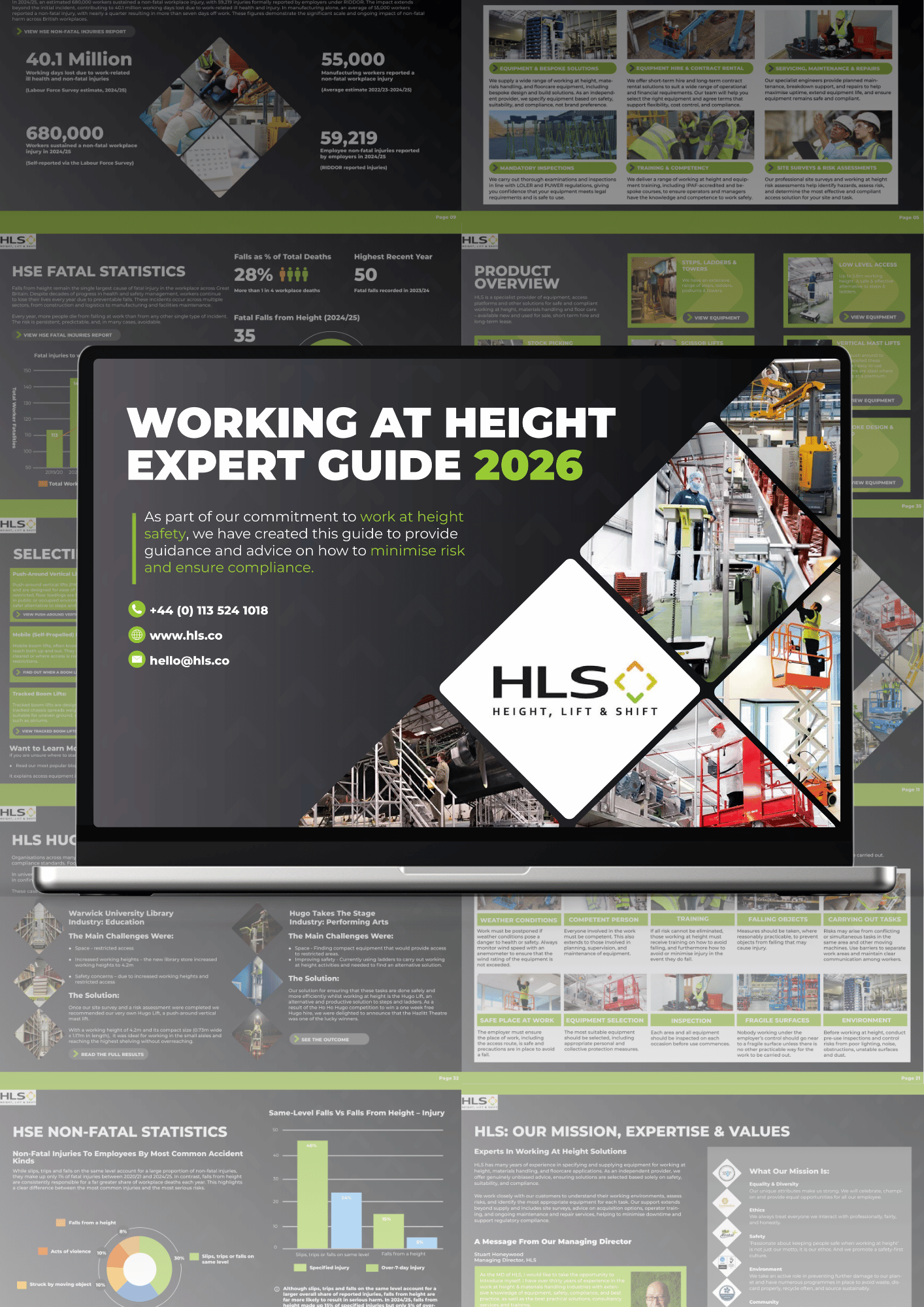
We provide practical resources, checklists, and guidance to help businesses improve work at height safety and reduce unsafe shortcuts.
Final Thoughts: Awareness Must Lead to Action
No Falls Week is an important reminder that falls from height are preventable.
But prevention requires more than awareness alone.
It requires better planning, safer equipment choices, stronger safety culture, regular training, and the confidence to challenge unsafe shortcuts before an incident happens.
This No Falls Week, take the opportunity to review how your business manages work at height and consider whether safer alternatives could help reduce risk.

-1.png)