

.png)




Every workplace fatality is more than a statistic. It is a colleague who never returned home, a family left grieving and a reminder that workplace safety should never be taken for granted.
The Health and Safety Executive's (HSE) latest workplace fatality statistics for 2025/26 show that 126 workers lost their lives while at work. While there are encouraging signs, including fewer deaths resulting from falls from height, several other causes of fatal accidents have increased, showing that many workplace risks remain.
So, what do these figures mean for your organisation?
In this blog, we will explore the key findings from this year’s HSE report, discuss what employers can learn from the latest fatalities, and highlight practical steps you can take to reduce risk, improve compliance and help ensure everyone gets home safely at the end of the day.
The 2025/26 Workplace Fatality Figures
📊 126 workers lost their lives in work-related incidents. (Up from 124 last year).
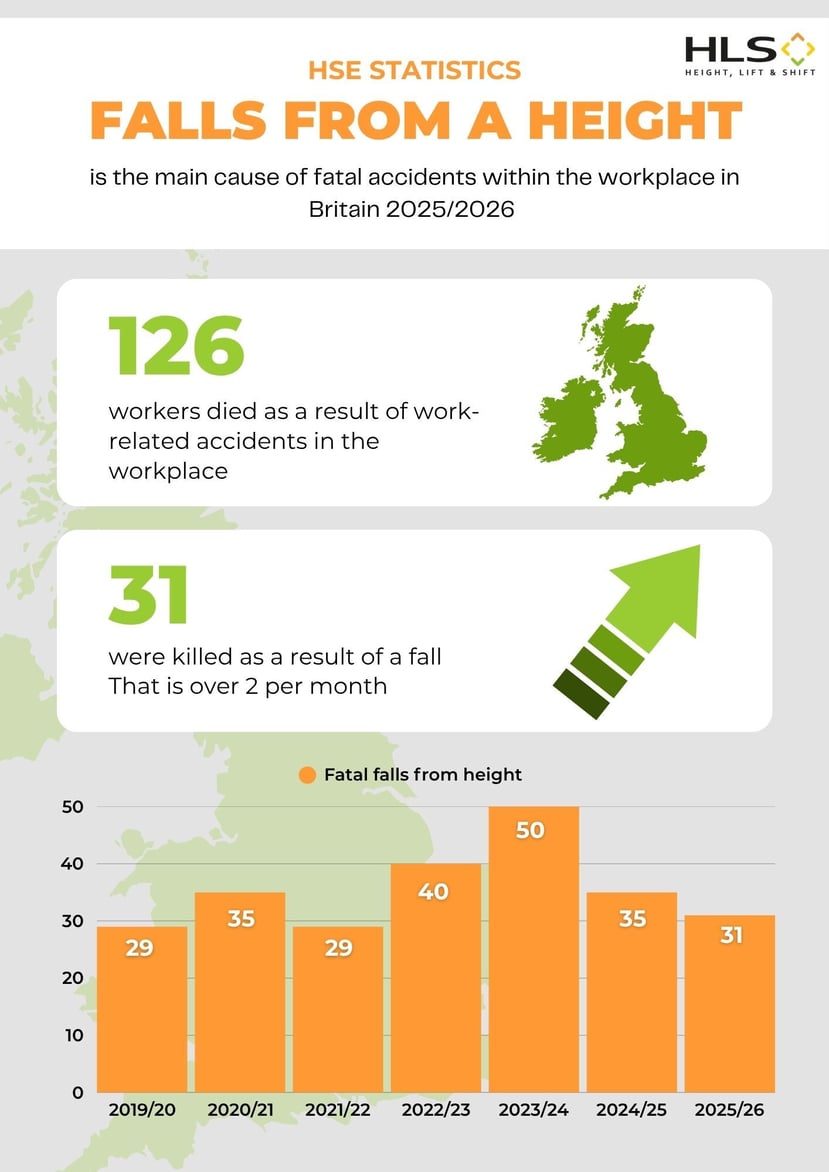
📉 31 fatalities were caused by falls from height (down from 35 last year).
🚧 25 fatalities occurred in construction (down from 35 last year).
🚜 22 fatalities occurred in agriculture, forestry and fishing. (up from 23 last year).
🚛 24 workers were killed by moving vehicles (up from 14 last year).
📦 21 workers were struck by moving objects (up from 18 last year).
🏗️ 18 workers were trapped by something collapsing or overturning (up from 17 last year).
👉 Read more: HSE workplace fatality statistics for 2025/26
Falls From Height Remain One of the Biggest Workplace Risks
Although fatalities from falls from height have reduced this year, they remain the leading cause of workplace deaths, accounting for around a quarter of all worker fatalities.
Why it matters
A fall from height can have life-changing consequences, not only for the person involved but also for their colleagues, families, and employers. Beyond the human cost, incidents can lead to project delays, enforcement action, financial penalties, and lasting reputational damage.
Why do Falls from Height Still Happen?
Despite increased awareness and stricter health and safety requirements, falls from height remain one of the leading causes of workplace fatalities because many of the same hazards continue to go unmanaged. Effective work at height safety relies on selecting the right access equipment, carrying out suitable risk assessments, ensuring equipment is properly inspected and maintained, and making sure workers are competent to carry out the task safely.
No single control measure is enough. Safe planning, appropriate equipment, effective training and a clear rescue plan all play an important role in reducing the risk of a fall.
Common causes of falls from height
Many falls from height can be traced back to preventable issues, including:
- Using unsuitable access equipment instead of the safest solution for the task.
- Inadequate planning or failing to complete a suitable work at height risk assessment.
- Poorly maintained, damaged or uninspected access equipment.
- Lack of operator competence or insufficient training.
- Failure to prepare an effective rescue plan before work begins.
- Unsafe working practices, including taking shortcuts or working without appropriate supervision.
- Slips, trips and loss of balance while working at height.
What should employers consider?
Reducing the risk of falls from height starts with creating a proactive safety culture. Employers should ensure work is properly planned, suitable equipment is selected, regular inspections and maintenance are carried out, and workers receive the appropriate training for the tasks they undertake. Reviewing working practices regularly and encouraging employees to report hazards can also help prevent incidents before they occur.
Ask yourself: When was the last time your organisation reviewed its working at height procedures? Could small improvements today help prevent a serious incident tomorrow?
Safety Is About More Than Falls from Height
While it is encouraging to see fewer fatalities from falls from height, several other causes of workplace fatalities have increased this year, including:
- Moving vehicle incidents increased from 14 to 24
- Workers struck by moving objects increased from 18 to 21
- Workers trapped by collapsing or overturning objects increased from 17 to 18
These figures highlight that workplace safety extends far beyond a single hazard. Every workplace has different risks, but many of the factors behind serious incidents are the same: inadequate planning, poor maintenance, ineffective traffic management and unsafe working practices.
Consider this: Are you focusing on the risks that are most likely to cause serious harm in your workplace, or only the ones that receive the most attention?
Which Industries Are Most at Risk?
While workplace fatalities can happen in any sector, the latest HSE statistics show that some industries continue to face significantly higher risks than others. Understanding where these incidents occur can help all employers identify common hazards and strengthen their own approach to safety.
In 2025/26, the industries with the highest number of worker fatalities were:
- Construction: 25 fatalities
- Agriculture, forestry and fishing: 22 fatalities
Together, these sectors account for almost 40% of all workplace deaths. Although construction recorded the greatest number of fatalities, agriculture continues to have the highest fatal injury rate of any industry.
What does this mean for other industries?
Even if your organisation does not operate in construction or agriculture, the findings remain highly relevant. Many of the leading causes of fatal incidents, such as falls from height, moving vehicles, moving machinery, and falling objects, exist across manufacturing, warehousing, logistics, engineering, facilities management, and many other sectors.
The key takeaway is that no workplace is immune to risk. Every employer should regularly review risk assessments, ensure equipment is suitable and well maintained, and provide employees with the training and resources they need to work safely.
Think about your own workplace: What are the highest-risk activities your employees carry out each day, and are the right controls in place to manage them?
Older workers remain most at risk
The latest HSE report highlights the continued impact of workplace fatalities on older workers, with those aged 60 and over disproportionately represented in the statistics.
- 32% of all worker fatalities involved people aged 60 and over.
- Yet they make up only 12% of the workforce.
- Workers aged 65 and over have a fatal injury rate around four times higher than the average worker.
Why are older workers more at risk?
There is no single reason why older workers are more likely to be involved in fatal workplace incidents. Many continue to work in higher-risk industries, such as construction and agriculture, where hazards are greater. In some cases, age-related changes, such as reduced balance, mobility or reaction times, may also influence the likelihood or severity of an incident. However, every individual is different, and employers should avoid making assumptions based on age alone.
What should employers consider?
As workforces continue to evolve, employers should ensure that risk assessments take account of the needs of all employees rather than adopting a one-size-fits-all approach. This includes selecting suitable equipment, maintaining safe working environments, providing appropriate training, and regularly reviewing working practices to help reduce risks for workers of all ages.
Ask yourself: Do your current risk assessments and working practices reflect the changing needs of your workforce?
The Same Accidents Happening
One of the clearest messages from this year’s HSE report is that many workplace fatalities continue to stem from the same well-known hazards. While the statistics may change slightly each year, the underlying causes remain largely consistent.
The most common causes of fatal workplace incidents include:
- Falls from height
- Being struck by moving vehicles
- Being struck by moving objects
- Contact with moving machinery
- Objects collapsing or overturning
The fact that these hazards continue to feature year after year shows that workplace safety is not about responding to new risk, it is about consistently managing the ones we already know exist.
Employers should use these findings as an opportunity to review their own safety arrangements by asking questions such as:
- Are our risk assessments up to date?
- Are employees using the most suitable equipment for the task?
- Is equipment being inspected and maintained regularly?
- Do employees have the training and supervision they need?
- Are we encouraging workers to report hazards and near misses?
The HSE statistics should not simply be viewed as a report on the past. They should be used as a checklist for the future. Every organisation has an opportunity to learn from these findings and identify where improvements can be made before an incident occurs.
How can HLS help?
The latest HSE workplace fatality statistics highlight both encouraging progress and areas where more work is needed. While fatalities from falls from height have declined, many of the same preventable hazards continue to claim lives each year. The report serves as a reminder that effective workplace safety relies on careful planning, suitable equipment, regular maintenance, and ongoing training.
Creating a safer workplace does not always require major changes. Often, it is about reviewing existing procedures, identifying areas for improvement and ensuring employees have the right knowledge and equipment to work safely.
At HLS, we understand that every workplace is different, which is why we offer a range of solutions to help organisations improve safety, reduce risk, and create safer working at height environments.
Here are just some of the ways we can help:
✔️ Work at Height resources:
- HLS Work at Height Checklist
- HLS Rescue Plan Template
- HLS MEWP Pre-Use Inspection Checklist
- HLS Risk Assessment Form
✔️ Maintenance & Repair:
- Planned preventative maintenance (PPM)
- Thorough Examinations (LOLER)
- PUWER inspections and servicing
✔️ Working at Height Solutions:
Every workplace faces different challenges, but the goal is always the same: ensuring everyone goes home safely at the end of the day.
If this report has encouraged you to review your own workplace safety, our team is here to help with practical advice, compliant equipment, maintenance services and expert training tailored to your organisation.
.png)