
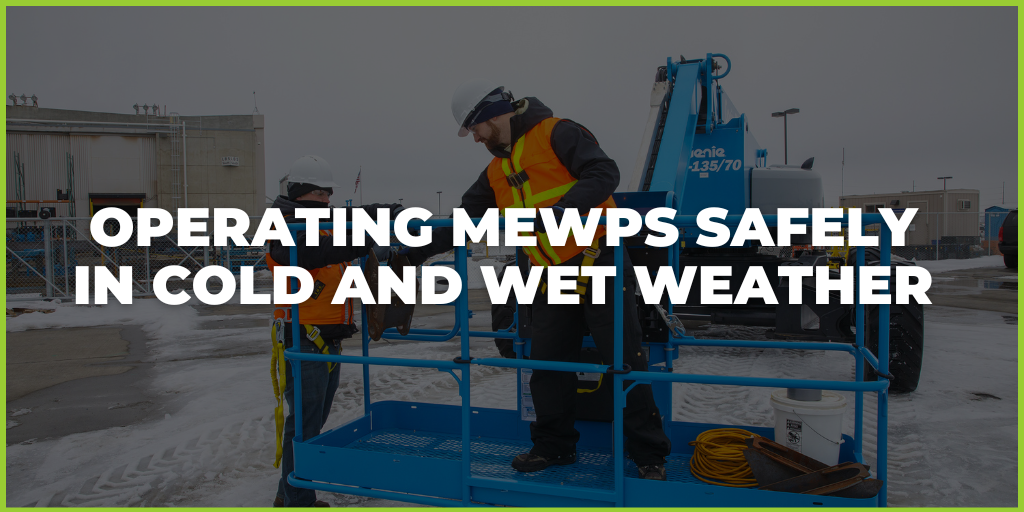




With the Christmas shutdown fast approaching and temperatures continuing to drop, now is the ideal time to ensure your sites, equipment, and teams are fully prepared for winter conditions. Cold, wet, and icy weather creates serious challenges for anyone working at height, especially when operating Mobile Elevating Work Platforms (MEWPs).
Find out what a MEWP is HERE.
This blog provides a comprehensive, practical guide on how to operate MEWPs safely in cold and wet conditions, helping you protect your workforce, maintain productivity, and stay compliant throughout the winter season.
Pre-operation checks for cold and wet weather
A thorough risk assessment is essential before any work commences. Identify and evaluate site-specific hazards such as ice build-up, and wet set surfaces. Review safety protocols and update training to address winter-specific risks. Ensure all equipment and machinery are in good working order and winter-ready.

Conduct a risk assessment:
Following the HSE’s step-by-step risk management process, winter MEWP checks should involve the following:
1. Identify hazards
- Ice on platforms, steps, tyres, or access routes
- Hidden ground hazards under snow
- Increased wind speeds at height
- Frozen or stiff hydraulic components
2. Assess the risks
Evaluate:
- Likelihood of slips, overturns, crushing or entrapment.
- Operator exposure to cold stress
- Potential for equipment malfunction
3. Control the risks
- Clear ice, snow, and standing water
- Set wind limits and stop-work thresholds.
- Provide seasonal PPE
- Train operators on winter hazards
4. Record your findings
If you employ 5+ people, record significant winter hazards and planned controls.
5. Review controls regularly
Weather changes fast, controls must be reviewed daily or when conditions change.
Alongside the risk assessment, a clear and practiced rescue plan must be in place to ensure operators can be brought to safety quickly and effectively in the event of an equipment failure, weather change, or emergency during MEWP operations.

Essential winter maintenance for MEWPs
- Schedule Preventive Maintenance: Preventative maintenance visits should be scheduled well in advance to ensure that all equipment is in optimal condition. Keep a detailed record of any reported issues and ensure they are addressed promptly.
- Inspect and update components: Regularly inspect all components, including batteries, hydraulic systems, and control systems. Replace or repair any parts that show signs of wear or damage. Cold weather can affect battery performance, leading to reduced capacity and slower chemical reactions. It is advisable to store equipment in temperature-controlled areas when not in use to prevent battery degradation.
- Lubrication and fluids: Ensure that all moving parts are adequately lubricated and that fluids are topped up. Use winter-grade lubricants and antifreeze where necessary
Proper storage of equipment and machinery in cold weather
One of the most common causes of repair call-outs in winter is the failure of equipment due to cold weather. Proper storage of MEWPs and other machinery can prevent many of these issues. Here are some key practices:
- Temperature Controlled Storage: Store equipment that is not being used in a temperature-controlled area. Cold batteries are a frequent culprit for machinery failures, as low temperatures can reduce the chemical reactions within lead-acid batteries, dropping their capacity by about 20%.
- Battery Maintenance: Lead-acid batteries with a low state of charge can actually freeze at around -1 degrees Celsius. Keeping machines indoors or in a warmer environment can prevent battery degradation. Additionally, use battery blankets and block heaters to maintain optimal battery temperature.
Managing engine performance in low temperatures
Diesel engines, in particular, can struggle to start in cold weather due to battery condition and insufficient preheating. Here are some tips to manage engine performance:
- Periodic Engine Running: Run the engine periodically to maintain the battery state of charge. This practice helps to keep the battery warm and ensures that the engine starts more easily.
- Check Antifreeze Levels: For any water-cooled systems, make sure the antifreeze levels are sufficient. Failing to do this can cause the engine to overheat, leading to severe damage.
Protecting control systems from winter conditions
Control systems are particularly vulnerable to cold weather conditions. Ice can form on control boxes and switches, and when the temperature rises, the ice melts and can cause water ingress into electrical components. Here are some protective measures:
- Cover Control Systems: Ensure that platforms, control boxes, switches, joysticks, and other control systems are covered during cold weather to prevent ice formation.
- Regular Inspections: Regularly inspect control systems for any signs of ice build-up or water ingress. Address any issues immediately to prevent further damage.
Preparing MEWPs for safe operation in cold and wet weather
Preparation is key to ensuring that MEWPs operate safely in winter conditions. Here are some essential steps:
- Understand Machine Capabilities: Pay close attention to the machine capabilities and environment conditions. Some machines are designed for indoor use only, while others can be used both indoors and outdoors. Ensure that the machine you are using is suitable for the conditions.
- Tyre and Track Maintenance: Be mindful that tyres and tracks may not handle cold conditions well. Check the condition of tyres and tracks regularly and replace them if necessary.
- Warm-Up Time: Allow the MEWP to warm up properly before use. In cold conditions, MEWPs may experience battery drain or sluggish hydraulics if the machine has not warmed up.
Choosing the Right Personal Protective Equipment
The right personal protective equipment (PPE) is crucial for operators working in cold and wet conditions. Winter clothing should be wind-proof and insulated to protect against hypothermia. Did you know that temperatures can drop by 1 degree for every 100 metres of elevation? This makes it even more important to dress warmly.
PPE & Clothing
- Layered clothing to trap heat
- Insulated gloves for dexterity in cold conditions
- Waterproof, non-slip boots
- Thermal hats compatible with helmets
- High-visibility winter jackets
Cold Stress Awareness
Operators should know the early signs of:
- Frostbite
- Hypothermia
- Fatigue
- Loss of dexterity
The role of regular breaks in ensuring safety
Regular breaks are essential to maintain safety and reduce fatigue, especially during the winter months. Cold weather increases the calories used by a worker, leading to quicker fatigue. Schedule frequent breaks to allow workers to warm up, hydrate, and consume high-energy snacks.
Breaks also provide an opportunity to assess the team’s condition and address any signs of cold stress, hypothermia, or frostbite. Encourage your team to speak up if they feel unwell or experience any symptoms of cold-related illnesses. Prioritising regular breaks not only enhances safety but also boosts productivity and morale.
The importance of training
Training is crucial for ensuring that operators are well-prepared to handle the challenges of winter conditions. At HLS offer a range of courses designed to equip operators with the knowledge and skills they need to operate MEWPs safely in winter:
- IPAF Training (PAV, 1a, 3a, and 3b: Comprehensive practical and theoretical training covering the safe operation of all key MEWP categories — Push-Around Vertical (PAV), Static Vertical (1a), Mobile Vertical (3a), Mobile Boom (3b), and combined 3a/3b certifications.
- MEWPs for Managers Training: Training for supervisors and managers overseeing MEWP operations. Covers risk assessment, safe systems of work, and emergency procedures.
- Bespoke Solutions: We provide customised training solutions tailored to the specific needs of your business. Whether you need training for a particular type of equipment or specific winter hazards, we can design a program that meets your requirements.
- Forklift Truck Training: Training focused on forklift stability, causes of instability, correct operating methods, safe use of attachments, and best practice for loading and unloading, especially important on wet or slippery winter surfaces.
- Pallet Truck Training: Training covering understanding controls, carrying out pre-use checks, and applying correct operating techniques to stay safe in winter conditions.
Conclusion
Winter poses unique challenges for operating MEWPs, but with proper preparation and training, these challenges can be effectively managed. By conducting thorough site risk assessments, scheduling preventative maintenance, properly storing equipment, managing engine performance, protecting control systems, and preparing MEWPs for winter conditions, you can ensure safe and efficient operations.
If you need advice or planned maintenance or repairs we can help.
Our team of work at height engineers and specialists are always on hand to help answer any questions or concerns you may have.
Feel free to give us a call on +44 (0) 113 524 1018 send an email to hello@hls.co.

-1.png)