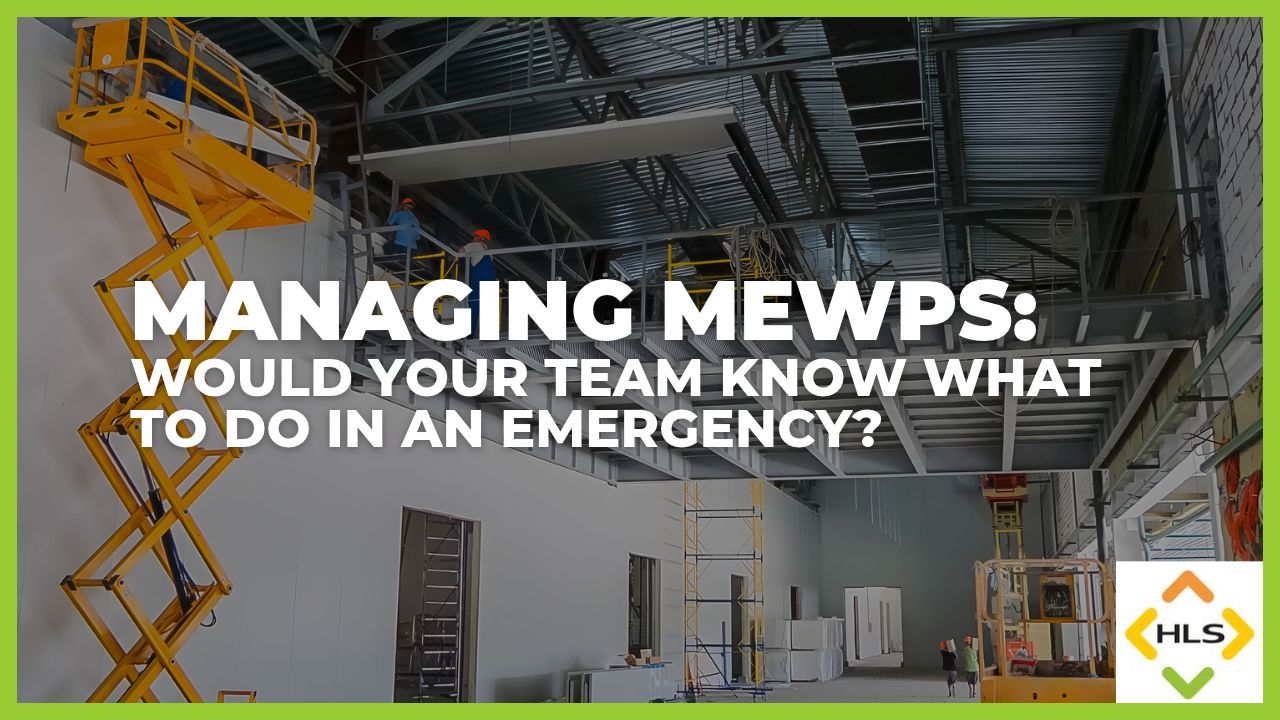



Your mobile elevating work platform (MEWP) operators may be fully trained and your equipment thoroughly inspected. But if a platform stopped working at height or an operator became unwell, would anyone on the ground know how to bring them down safely?
HSE’s provisional figures show that 31 workers died following falls from height in Great Britain in 2025/26. Falls from height also accounted for 8% of employer-reported non-fatal injuries to employees in 2024/25. These figures cover work across all industries, highlighting why both preventing falls and preparing for emergencies matter.
For managers and supervisors, preparing for these situations starts before work begins. That means having a clear, practised rescue plan in place, with suitable equipment, competent people and everyone understanding their role.
What delegates learned on our IPAF MEWPs for Managers course?
In October, we welcomed delegates to our IPAF MEWPs for Managers course. Their biggest learning point was understanding how responsibilities are shared between the people involved in a carrying out a working at height activity involving a MEWP.
For example, managers need to make sure the work is properly planned, suitable equipment is selected and competent people are available. Supervisors need to check that the agreed procedures are followed and respond if conditions change. Operators need to complete pre-use checks, understand the machine’s controls and report faults or concerns.
Rescue arrangements also need clear ownership. Agree who is responsible for:
- Preparing the site-specific rescue plan.
- Confirming the necessary people and equipment are available.
- Responding from the ground, with familiarity with the machine’s emergency lowering controls and the agreed rescue procedure.
Our HLS working at height rescue plan template provides a starting point for documenting your site-specific arrangements and assigning responsibilities.
Everyone involved should understand their role before work begins.
Why rescue planning cannot be an afterthought.
A rescue plan is a documented procedure that explains how people will be recovered safely if something goes wrong. It should reflect your site, the specific machine and the task.
Think beyond a straightforward breakdown. Different emergencies can require different responses:
- An operator becomes unwell: They may be unable to operate the controls or communicate, so someone on the ground needs to know how to respond.
- The normal controls fail: The response will depend on the fault and the machine’s emergency lowering systems, which designated people must know how to use.
- Someone becomes trapped against an overhead structure: Moving the platform could worsen their injuries, so the response must take account of their position and the direction of movement.
Your plan should also consider how someone would be rescued if they fell or were ejected from a boom platform and remained suspended in their harness. Our blog explains the benefits of wearing a full body harness and suitable lanyard.
The Health and Safety Executive (HSE) advises that a MEWP rescue plan should be in place and practised regularly, with someone on the ground who knows how to respond in an emergency and how to operate the ground controls.
IPAF’s Global Safety Report 2026 recorded a 14% increase in reports of falls from platforms between 2024 and 2025. This reinforces the importance of planning, supervision and preparing for emergencies during MEWP operations.
7 Key Considerations When Planning a MEWP Rescue
Our HLS Working at Height Rescue Plan Template provides a starting point for developing your site-specific arrangements, with sections covering key contacts, rescue equipment, equipment inspection and rescue factors.
Do you have a MEWP rescue plan?, explains the key considerations when planning how to recover platform occupants during a malfunction or emergency.
Alongside completing the template, consider the following questions when preparing and reviewing your MEWP rescue arrangements:
- The site and its surroundings
Where will the MEWP be used? Consider overhead obstructions, restricted access routes, nearby activities and anything that could prevent rescuers from reaching the machine. - Who will respond
Have competent people been identified, and will they be available throughout the work, including during breaks and shift changes? - How to raise the alarm
How will the operator and ground personnel communicate? Make sure everyone knows who to contact and how to alert others on site. - How occupants will be recovered
Do your arrangements follow the manufacturer’s instructions for the specific machine, including the appropriate use of ground controls and emergency lowering systems? If these cannot safely recover the occupants, any alternative rescue method must be planned by competent people. - What rescue equipment is needed
What equipment does your planned response require? Check that it is suitable, accessible and maintained. - When and how to get additional help
Does everyone understand when further assistance is needed? Confirm who will contact emergency services and how they will be directed to the work area. - How contractor arrangements fit in
Your rescue arrangements should reflect the actual task, equipment and site conditions. Read why the difference between generic and site-specific risk assessments matters when planning work at height.
For further guidance, see IPAF’s principles of MEWP recovery and rescue.
Where contractors are involved, have responsibilities been agreed? Check that their rescue arrangements work alongside your site emergency procedures.
Would your ground personnel know what to do?
If your operator cannot respond, your nominated ground personnel need to understand the agreed rescue procedure. Before work begins, ask:
- Are they familiar with the machine? Do they understand its ground controls and emergency lowering systems?
- Can they access the controls? Are access routes clear, and do they know where any required keys and instructions are kept?
- Do they understand their limits? Can they recognise when further assistance is needed?
- Is cover always available? Who will respond during breaks, shift changes or when nominated personnel are occupied elsewhere?
Include everyone responsible for rescue in your preparations and briefings so they understand their role.
Practising Your MEWP Emergency Rescue Plan
A safely planned practice session can reveal gaps that are easy to miss on paper. Use it to check:
- Communication: Can everyone communicate clearly? Would noise or distance make it difficult to raise the alarm or hear instructions?
- Access to emergency controls: Can responders reach the controls? Could nearby equipment or activities block access?
- Availability of rescue equipment: Is essential equipment close enough? Can it be located and accessed without unnecessary delay?
After the exercise, ask your team:
- What worked as expected?
- What took longer than planned?
- What needs to change?
Update the plan, brief everyone involved and review your arrangements whenever the equipment, task, people or site conditions change.
Build your confidence in managing MEWP operations
If you plan or oversee MEWP work, you need to understand what to check, who is responsible and when to take action.
Our IPAF MEWPs for Managers course helps you make more informed decisions about equipment selection, operator competence, familiarisation, supervision and rescue planning.
Attending can help you identify gaps in your existing arrangements, ask contractors and operators the right questions, and understand how responsibilities fit together before work begins.
As delegates highlighted last week, that clarity around everyone’s responsibilities was a key takeaway they could bring back to their workplaces.
How confident are you that your MEWP arrangements cover everyone’s responsibilities?
Explore what IPAF MEWPs for Managers training covers or HLS MEWPs for Managers Quiz to put your knowledge to the test.