

-1.png)




August is flying by and, as the summer holidays begin to wind down, many workplaces are starting to get back into their usual routines.
Teams are returning, projects are picking up and jobs that have been waiting in the background are becoming a priority again.
Before everything gets back up to full speed, it is worth taking a moment to review some of the key health and safety developments from August.
From recent HSE prosecutions involving falls from height and unsafe ladders to guidance around lone working, this month has provided plenty of reminders about the importance of planning work properly, using suitable controls and making sure those controls are actually in place.
1. Safety Spotlight: What Can We Learn from Recent HSE Cases?
Three recent HSE prosecutions highlight some important lessons for anyone responsible for working at height.
Bricklayer Hospitalised After Falling Through Collapsing Floor
A bricklayer was hospitalised for a month after falling when a floor collapsed beneath him at a construction site in Oldham.
The 25-year-old was working on an upper level of a house under construction when the floor gave way. He fell alongside concrete blocks that had been stored on the upper floor, suffering fractures to his leg, hip and hand which required surgery.
The HSE investigation found several failings, including the floor being overloaded with concrete blocks, construction work not being carried out in accordance with the manufacturer's design, unsafe scaffolding and inadequate arrangements for working at height.
The company was fined £30,000 and ordered to pay £4,883 in costs.
Why does it matter?
Working at height safety is not just about the equipment someone is using.
The condition and strength of the structure, how materials are stored, access arrangements and the overall method of work all need to be considered before work begins.
A suitable piece of equipment cannot make an otherwise unsafe working environment safe.
What can you do?
Before starting work at height, make sure the wider working environment has been accurately assessed.
Consider whether the structure can safely support the work, whether materials are being stored safely and whether the planned access and equipment are appropriate for the task.
Key takeaway: Effective working at height planning considers the whole working environment, not just how someone will get up and down.
Read the full HSE case to see what went wrong and what employers can learn from the incident.
Construction Company and Director Fined After Unsafe Roof Work
A construction company and its director have been fined after workers were seen carrying out unsafe roof work in central London.
Workers were accessing a roof using a makeshift platform balanced on a stepladder, with no suitable fall protection or safe means of access.
Scaffolding had been identified as a control measure in the risk assessment, but it had not been put in place.
The company was fined £4,020, while the director was fined £2,300 and ordered to pay £8,000 in costs.
Why does it matter?
A risk assessment can identify the right controls, but those controls need to be in place when work starts.
It can be easy for a job to change once work begins, particularly when teams encounter difficult access or unexpected problems. That is when unsafe workarounds can become tempting.
If the planned control is not available, the safest option may be to stop and reassess the task rather than find a quick alternative.
What can you do?
Check that the controls identified in your risk assessment are available and being used on site.
It is also worth making sure workers understand when they should stop work and raise a concern if the planned arrangements are not in place.
Key takeaway: A safe system of work is only effective when it is properly implemented.
Read the full HSE case and see why putting the right controls in place matters.
Council Fined After Stepladder Collapse Leaves Worker with Broken Ribs
A worker suffered a fractured collarbone and broken ribs after a stepladder collapsed while he was attempting to access a loft space.
The HSE investigation found that ladders in poor condition had remained accessible to employees and workers had not received suitable training on how to assess whether a ladder was safe to use.
Wirral Council was fined £6,000 and ordered to pay £4,000 in costs.
Why does it matter?
Ladders are familiar pieces of workplace equipment, but that does not make them risk-free.
A ladder needs to be in good condition, suitable for the task and used correctly. Workers also need to understand how to identify when a ladder is damaged or when another form of access would be more appropriate.
For tasks that involve more than short-duration and light work, it is worth considering whether a safer alternative could be used. As a general guide, if a task requires someone to remain on a ladder or stepladder for more than 30 minutes at a time, alternative access equipment should be considered.
What can you do?
Regularly inspect workplace ladders and make sure damaged equipment is removed from use.
It is also worth checking that employees know how to assess whether a ladder is suitable before they climb.
Key takeaway: Familiar equipment still needs proper inspection, training and assessment before use.
Read the full HSE case and learn more about the importance of safe ladder use.
The Common Lesson: Plan Before Work Begins
Although these three HSE prosecutions involved different circumstances, they all highlight the same underlying issue: the importance of planning work properly before it begins.
Whether the risk comes from a fragile structure, unsuitable access equipment or controls not being implemented, problems are much easier to address before someone starts the job.
When reviewing your own working at height arrangements, consider whether:
- The equipment is suitable for the task and working environment
- Workers have the right training and competence
- Equipment is inspected and maintained
- Suitable controls are available on site
- Risk assessments reflect how the work is being carried out in practice
Taking a few minutes to review these arrangements now could help prevent a much bigger problem later.
2. Lone Working: Are Your Workers Properly Protected?
For many people, working alone is part of the job, whether they are carrying out maintenance, engineering, inspections or working on remote sites and outside normal working hours.
But when something goes wrong, there may be nobody nearby to raise the alarm or provide immediate assistance.
Lone workers can face additional risks, particularly when working with equipment, carrying out maintenance or completing tasks away from other people. Employers should consider the risks involved and make sure workers have the right training, supervision, communication and emergency arrangements in place.
What Should You Consider?
If your team includes lone workers, take a moment to consider:
- Is the task properly risk assessed?
- Are workers competent and suitably trained?
- Do they have a reliable way to raise the alarm?
- Are suitable arrangements in place to check on workers?
- Is the equipment being used appropriate for the task?
What happens if an incident occurs when nobody else is nearby?
These considerations become even more important when lone working involves work at height. Choosing the right equipment, ensuring workers are properly trained and having suitable procedures in place can all help to reduce risk.
Looking for more guidance? Explore our resources, read our latest blogs, or find out more about the training we have available to help your team work safely and confidently.
3. Getting Back into a Routine: Is Your Workplace Ready?
For many businesses, September brings a natural shift back into full swing.
When people return from holidays, projects pick up and those jobs that have been waiting in the background suddenly become a priority.
That makes now a good time to review your workplace safety arrangements.
Are your teams properly trained? Is your equipment in good condition? Are inspections up to date?
It is also worth looking at the tasks your teams carry out regularly.
If employees are still using ladders for jobs that take longer, require more movement or involve carrying out work from a ladder, could a safer and more suitable access solution improve the way the task is completed?
Your risk assessments and safe systems of work should also reflect what is happening on site, rather than simply what was planned when they were first written.
The recent HSE cases we have looked at this month all demonstrate the same thing: good safety starts with good planning.
4. HLS Updates & Important Dates
Pre-Owned Equipment Now Available From HLS
As part of our ongoing support for safer working at height, we have also been updating our pre-owned powered access equipment range.
Our current range includes:
From scissor lifts to compact push-around and low-level access solutions for tighter working environments, our pre-owned stock is carefully selected to support safe working at height across a wide range of industries.
Every machine is inspected, maintained and prepared for use, providing a cost-effective alternative without compromising on safety or performance.
Choosing pre-owned equipment can be a practical option for businesses looking for reliable access equipment while managing project costs. Whether you are working across manufacturing sites, maintenance projects or facility upgrades, having the right machine available can make all the difference.
Looking for a specific model?
Explore our current pre-owned equipment range or contact the HLS team to discuss the most suitable solution for your requirements.
Save the Date: Safety, Health & Wellbeing Live Manchester 2027
Safety, Health & Wellbeing Live Manchester will take place on 9–10 February 2027 at Manchester Central, bringing together health and safety professionals from across the industry.
Save the date and keep an eye out for more information from HLS.
Register Your Interest: 2027 Working at Height Guide
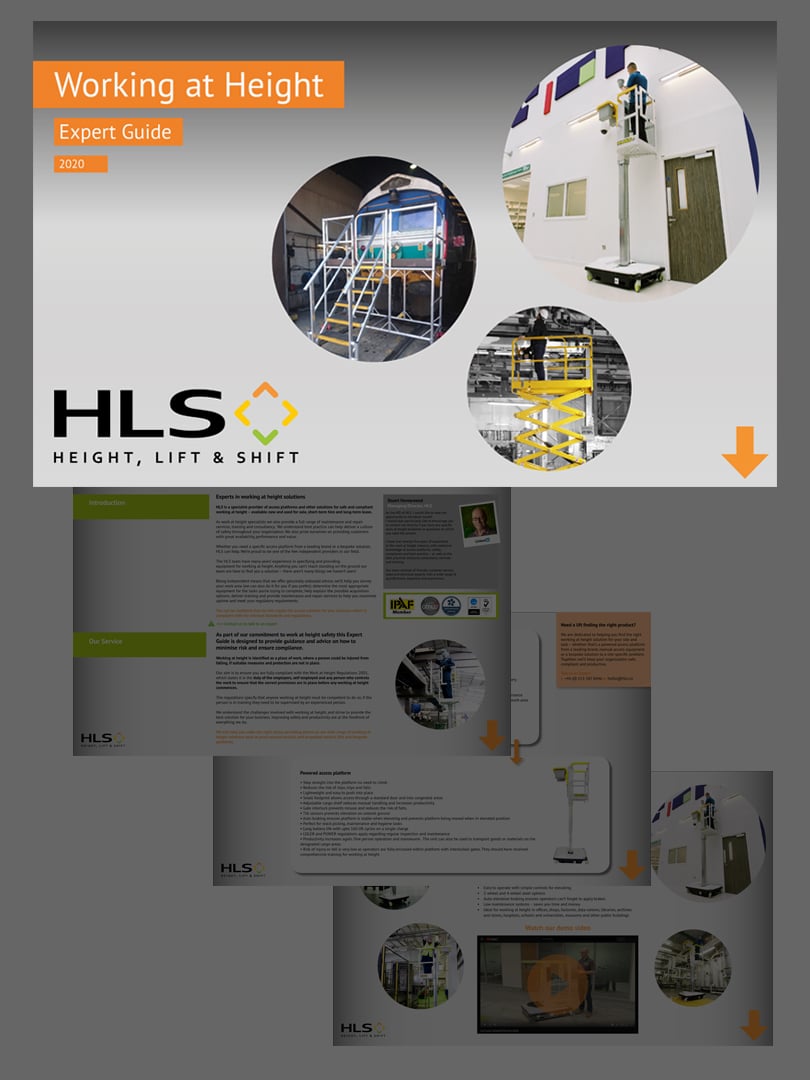
Our HLS Working at Height Expert Guide will be returning for 2027.
If you would like to be one of the first to receive the new guide when it is released, you can register your interest now.
The guide will bring together practical advice and key information to help businesses plan safer, more compliant working at height.
Register your interest today and be the first to know when the 2027 guide is available.
HLS: Supporting Safer Working at Height
From equipment selection and training to working at height advice, HLS can support businesses throughout the process of planning and carrying out work safely.
The lessons from this month's HSE cases are a useful reminder that safe working is not just about having the right equipment. It is about choosing the right solution, ensuring people are competent to use it and making sure the planned controls work in practice.
As teams prepare to get back into their usual routines, now is a good time to ask:
- Are you doing things the safest way, or simply the way they have always been done?
- Sometimes, that question is where better solutions begin.
Need advice on working at height or equipment selection? Contact the HLS team today.
August Bank Holiday Opening Hours
Please note that HLS will be closed over the August Bank Holiday weekend.
Our standard opening hours apply up to Friday 28th August.
Our opening hours will then be:
- Monday 31st August: Closed
- Tuesday 1st September: 8:30 am–5:00 pm
Out of Hours Support
If you require assistance outside of normal hours, please call:
0772 197 8911
You will be connected to our out-of-hours service.
Wishing you a great August Bank Holiday weekend from everyone at HLS. We hope you enjoy the break! 🌞
.png)