
.png)




Every month brings new reminders of why working at height safety must remain a priority.
In this month's update, we look at the latest HSE prosecution cases, share the newly updated HLS Working at Height Expert Guide featuring the latest fatal injury statistics, and reflect on a fantastic couple of days at Safety, Health & Wellbeing Live London.
One theme runs throughout this month's newsletter: preventing accidents starts with making informed decisions before work begins.
The recent HSE prosecutions are a powerful reminder that even routine tasks can have life-changing consequences when risks are underestimated, or simple safety measures are overlooked.
Let us take a look at what happened and, more importantly, what you can learn from it.
4 Falls from Height HSE Prosecutions: Lessons for Every Employer
1. Improvised access equipment led to life-changing injuries
A contractor in Kent suffered permanent injuries after falling from a tipping bucket attached to a forklift. A scissor lift had originally been planned for the task, but when it could not reach the work area, an alternative method was chosen instead.
It may have seemed like a practical solution at the time, but the consequences were life changing.
Ask yourself:
- What would your team do if the planned equipment was unsuitable?
- Would they stop the job and seek advice, or try to make another solution work?
- Do workers know when it is appropriate to refuse an unsafe method of access?
Key takeaway: The safest decision is often to stop, reassess and choose the right equipment, even if it means delaying the job.
Explore the full case and learn why choosing the right access equipment is critical.
2. Missing handrails prove fatal during loading operation
A warehouse supervisor lost his life after falling from a mobile loading ramp that was being used without the manufacturer specified handrails. The investigation also found that pedestrian risks had not been properly assessed, despite safer loading methods being available.
Questions worth asking:
- Are your loading ramps being used exactly as the manufacturer intended?
- Have you considered whether the task could be completed without working at height?
- Are pedestrians protected during loading and unloading?
Key takeaway: Before working at height, always ask whether the task can be completed another way. Eliminating work at height altogether is the safest option.
Read the full HSE prosecution and consider whether similar risks could exist in your workplace.
3. A simple task turned into a life-changing injury
Retrieving footballs from a school roof probably did not seem like a particularly hazardous task. However, when a site supervisor used an unsecured ladder, a fall resulted in traumatic brain injuries. The HSE investigation found there was no suitable risk assessment and no safe system of work in place.
Routine jobs are often the easiest to underestimate because they happen so frequently. However, they deserve the same level of planning as any other work at height activity.
Think about your workplace:
- How many "quick jobs" take place every week?
- Are everyday tasks, such as changing lights or clearing gutters, properly planned?
- Could a safer alternative to a ladder be used instead?
Key takeaway: The more familiar a task becomes, the easier it is to overlook the risks. Treat every work at height task with the same level of planning.
Read the full HSE prosecution to learn what went wrong and how similar incidents can be prevented.
4. Poor planning during dismantling results in a fatal incident
A labourer lost his life while dismantling a cleanroom structure after wall panels collapsed, knocking him from a scissor lift. Investigators found that structural risks had not been fully assessed and the company's own method statement had not been properly communicated or followed.
Having a method statement is only part of the process. Everyone involved must understand the plan, recognise the risks and follow the agreed safe system of work throughout the job.
Consider whether:
- Everyone understands the method statement before work begins.
- Structural risks are reviewed as the dismantling work progresses.
- Supervision is in place to ensure the work is carried out safely.
Key takeaway: Planning, communication and supervision are just as important as the paperwork itself.
Read the full HSE case and review the importance of planning, communication and structural risk assessments.
Latest 2025/26 HSE Fatality Statistics: Key Insights for Workplace Safety
Every workplace fatality is more than a statistic. Behind every number is a person, their family, colleagues and a reminder of why effective safety measures are so important.
The latest HSE fatality statistics highlight the ongoing challenges facing workplaces across Great Britain, with falls from height continuing to be one of the leading causes of fatal workplace injuries.
In our latest blog, we explore the key figures and what they mean for employers, including:
-
The latest workplace fatality statistics for 2025/26 and what the data tells us about current safety trends.
-
Why falls from height remain a major risk and the importance of effective planning and control measures.
-
The key lessons employers can take away to help prevent serious incidents and create safer working environments.
Read the full blog to explore the latest HSE statistics and discover how businesses can continue improving workplace safety.
What can your organisation learn?
Although these incidents happened in different industries, they all highlighted similar failures.
Ask yourself:
- Are routine tasks properly risk assessed?
- Are employees using the right access equipment?
- Could ladders be replaced with a safer alternative?
- Are workers trained and supervised?
- Have new or unusual tasks been fully planned?
A short review before work starts is often enough to prevent incidents that could have lifelong consequences.
What HLS has been working on this month?
At HLS, we have continued to focus on helping organisations improve working at height safety through practical guidance, equipment and training.
What is New in the Updated Guide?
Working at height continues to be one of the biggest safety challenges facing organisations, making it essential that guidance, processes and procedures reflect the latest industry insights.
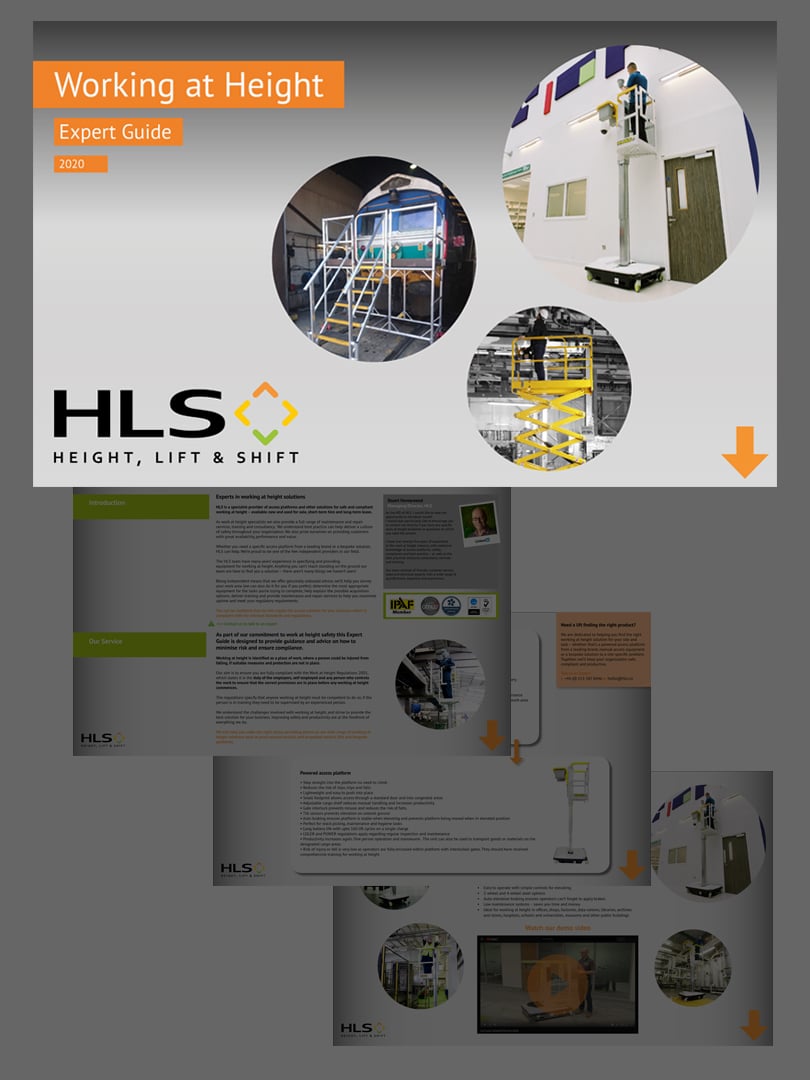
Our HLS Working at Height Expert Guide 2026 has been refreshed to include the latest HSE fatal injury statistics and provide practical advice to help organisations make safer decisions when planning and managing work at height.
Recent HSE prosecutions have highlighted the serious consequences that can occur when work at height is not properly planned, controlled or carried out by competent people. The updated guide supports employers by covering the key principles needed to reduce risk and improve safety across their organisation.
Inside the guide, you will find guidance on:
-
Why working at height matters, including the latest HSE fatal statistics.
-
Legal expectations and employer responsibilities when managing work at height.
-
Making safer decisions with a ladders last approach.
-
The importance of competence, training and industry best practice.
-
Practical ways to manage risk when planning work at height.
-
Equipment selection, bespoke solutions and real-life applications.
Whether you are reviewing existing procedures or looking to strengthen your approach, the guide provides practical support to help you create safer working practices.
👉 Find out what's new in the latest edition of our HLS Working at Height Expert Guide.
Safety, Health & Wellbeing Live London 2026
From 1-2 July 2026, HLS exhibited at Safety, Health & Wellbeing Live London, welcoming visitors to our stand to discuss the challenges they face when managing work at height.
One topic came up time and time again: finding safer alternatives to ladders for routine maintenance and facilities management tasks. Many visitors were also looking for practical advice on selecting the right equipment, improving planning processes and reducing risk when working at height.
To help address these challenges, we showcased solutions including the HLS Hugo Lift and HLS Cantilever Platform, demonstrating how the right equipment, combined with effective training and proper planning, can help create safer working environments and reduce risk before work even begins.
If you did not get the chance to visit us in London, we will be back at Safety, Health & Wellbeing Live Manchester in February 2027. Register your interest here to stay updated and arrange a visit to our stand.
Final thoughts
This month’s updates highlight one important message: preventing incidents starts before work begins.
From the latest HSE prosecutions and fatality statistics to practical guidance on planning work at height and selecting the right equipment, each reminder reinforces the importance of taking a proactive approach to safety.
By reviewing your procedures, ensuring workers have the right training and competence, and choosing suitable access solutions for the task, organisations can help reduce risk and create safer working environments.
Thank you for reading this month’s HLS News & Safety Update. We will be back next month with more working at height news, guidance and industry insights.
👉 Want to stay informed with the latest safety news, industry updates and practical advice? Subscribe to our newsletter and be the first to receive the next update.